Writing
The supervision bottleneck: solving the wrong problem
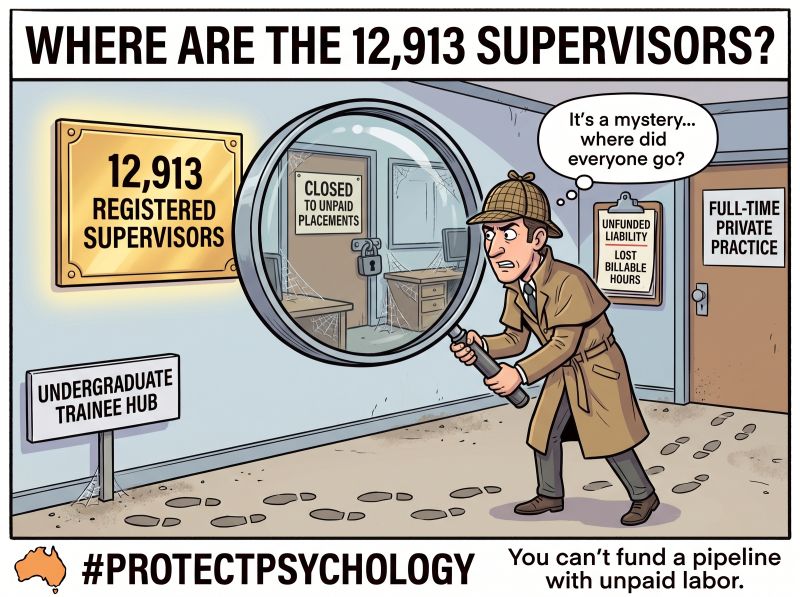
According to the Psychology Board, there are 12,913 Board-approved supervisors in Australia. That is roughly a quarter of the entire registered workforce. On paper, it looks like a healthy army of senior clinicians ready to train the next generation.
So where are they all? Why is every university, student and clinic in the country screaming about a catastrophic supervision bottleneck?
The answer is simple economics: the system doesn’t pay them to do it.
Supervision is work, and it isn’t paid like work
Supervising a trainee isn’t a passive tick-a-box exercise. It is a high-risk, labour-intensive responsibility, where a senior clinician puts their own registration on the line to carry someone else’s clinical risk. In a private sector built on fee-for-service, or a public sector obsessed with throughput KPIs, every hour spent supervising is an hour of lost billable care.
The market has already spoken. Most of those 12,913 supervisors supervise very few people, or have stopped supervising altogether, because the system asks them to absorb all the risk, liability and administrative drag while financially penalising them for doing it.
The question at the heart of the redesign
The Board’s proposed five-year degree relies on pushing hundreds of thousands of clinical placement hours into the earlier years of training.
If a quarter of the profession is already credentialed to supervise and already opting out under current conditions, how on earth is a massive new wave of undergraduate placement demand going to fix the bottleneck?
It can’t. It is policy by wishful thinking. You cannot solve a supply crisis by tripling demand on an infrastructure that senior clinicians are already walking away from.
Of the organisational submissions published so far, 77% explicitly warned the Board about this unfunded supervision problem. The people working in the field know the maths doesn’t work.
Fund the supervisors
If you want clinical placements, you have to fund the clinical supervisors. And when I say fund supervisors, I don’t mean splashing a couple of million dollars around to train another thousand. I mean building the incentives that make the 12,000 already there say yes.
Otherwise those 12,913 supervisors will keep doing exactly what they are doing right now: not supervising.
Also on: LinkedIn