Writing
New psychology standards: progress, pride and the need for prudence
If you’d asked me a few years ago what I thought of the APS Code of Ethics, I would have said it was like fibre: important, dry and good for your overall health. It was principled, built on consensus and largely invisible in daily practice. Above all, it was uncontroversial. Nobody, whatever their politics, got very excited about it. That was precisely the point.
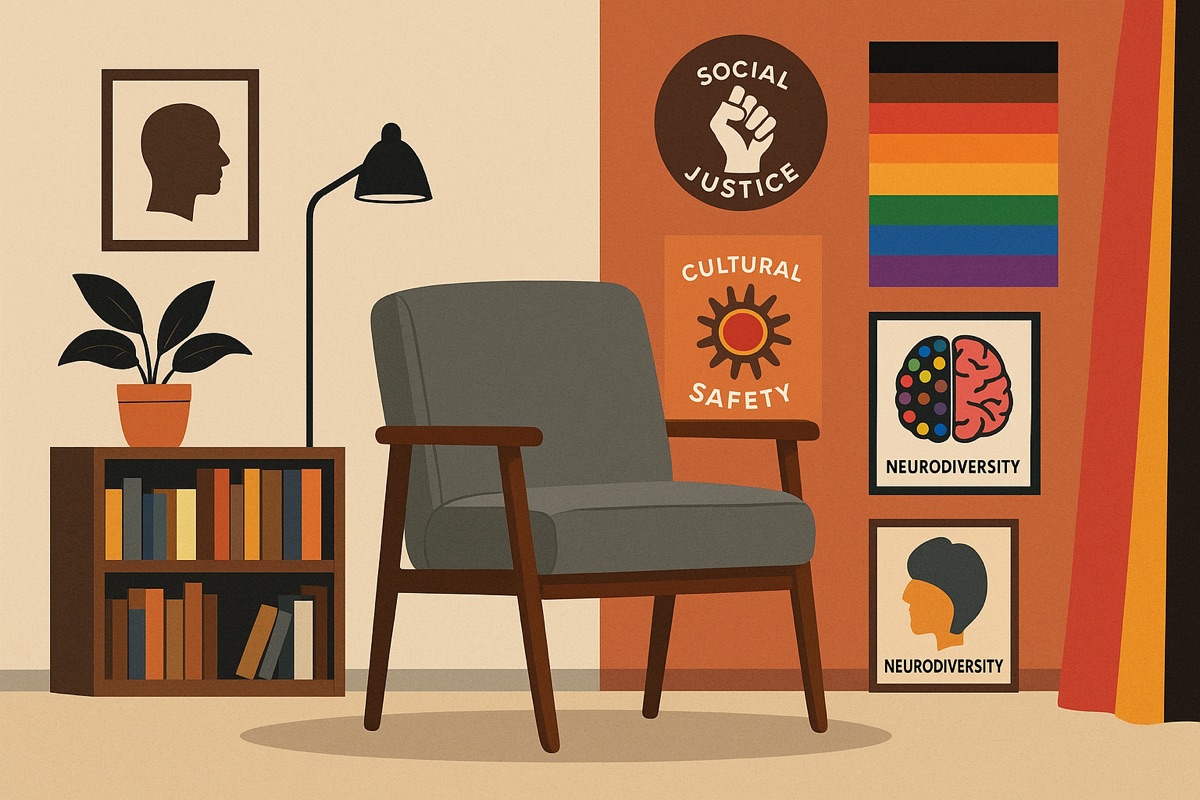
The Psychology Board’s new Code of conduct and Professional Competencies, which came into effect on 1 December 2025, are something different. They embed principles of decolonisation, cultural safety, intergenerational trauma and neurodiversity into the core of psychological practice.
I’m not here to dispute that shift. It has happened, and there is a lot in it that is good. But as we celebrate what these changes achieve, we also need to be honest about the new risks they create.
New standards, new risks
The political reality is simple. Anything that lines up too neatly with one side of a cultural divide risks alienating the other.
In an era of polarisation, driven by algorithmic echo chambers, standards that progressives celebrate will inevitably look to many conservatives like a manifesto. That doesn’t make the standards wrong. It does make triumphalism naive. If we act as though this was a universally welcome step forward, we blind ourselves to the backlash it could provoke.
Psychology in a divided country
Australia is not of one mind on these questions. The Voice referendum was rejected by around 60 per cent to 40. The marriage equality survey passed comfortably, but nearly four in ten voted no. And John Howard, our second-longest-serving Prime Minister, won four elections while deriding what he called the “black armband” view of history. Like it or not, there is a solid floor of support for socially conservative views in this country, somewhere around 40 per cent.
Meanwhile, psychology already struggles to engage some groups, especially men, who are under-represented in therapy, die by suicide at higher rates, and lean more conservative.
So we have to ask: do the safety signals we send to some groups send threat signals to others?
A young man came to see me recently. Before that, he had been to a single session at a youth mental health service. He told me that from the moment he walked into the waiting room, everything about it told him the service wasn’t for him, so he didn’t go back. He wasn’t a racist or a homophobe. I doubt he had thought much about any of the issues on the walls. He was simply a bloke more at home at the pub meat raffle, and he felt he had walked through the wrong door.
That’s the risk. Not that our standards are wrong, but that the way we express them tells some people, before we’ve said a word, that we’re not for them.
Trust is fragile
If our professional standards come across as:
- endorsing one particular lens on history and identity,
- assuming agreement with ideas that are still politically contested, or
- treating disagreement as resistance, rather than as a legitimate place to start a conversation,
then we risk a backlash. And it won’t only come from commentators looking for a culture-war target. It will come from the ordinary Australians who consume that commentary, and who will decide whether psychologists are people they can trust.
A call for awareness, not rejection
The new standards are here, and they aren’t up for debate. How they are perceived will be shaped largely by us: as practising psychologists, as educators and as advocates.
Psychologists have a habit of reaching for the code whenever someone disagrees with us. Will we wield these new standards as political instruments? Or will we interpret them in a way that extends a hand rather than a judgement?
We need a professional culture that upholds the new standards with integrity, uses language and practice that invite all Australians in, and respects deep cultural and political differences without requiring clients to sign up to a particular worldview.
I think psychology can meet this challenge. We can honour historical truths without alienating people still working through them. We can be inclusive without demanding ideological conformity. But only if we choose that path deliberately. The alternative is triumphalism, and in a polarised world, triumphalism rarely ends well.
Also on: Substack