Writing
Autism before we had a word for it
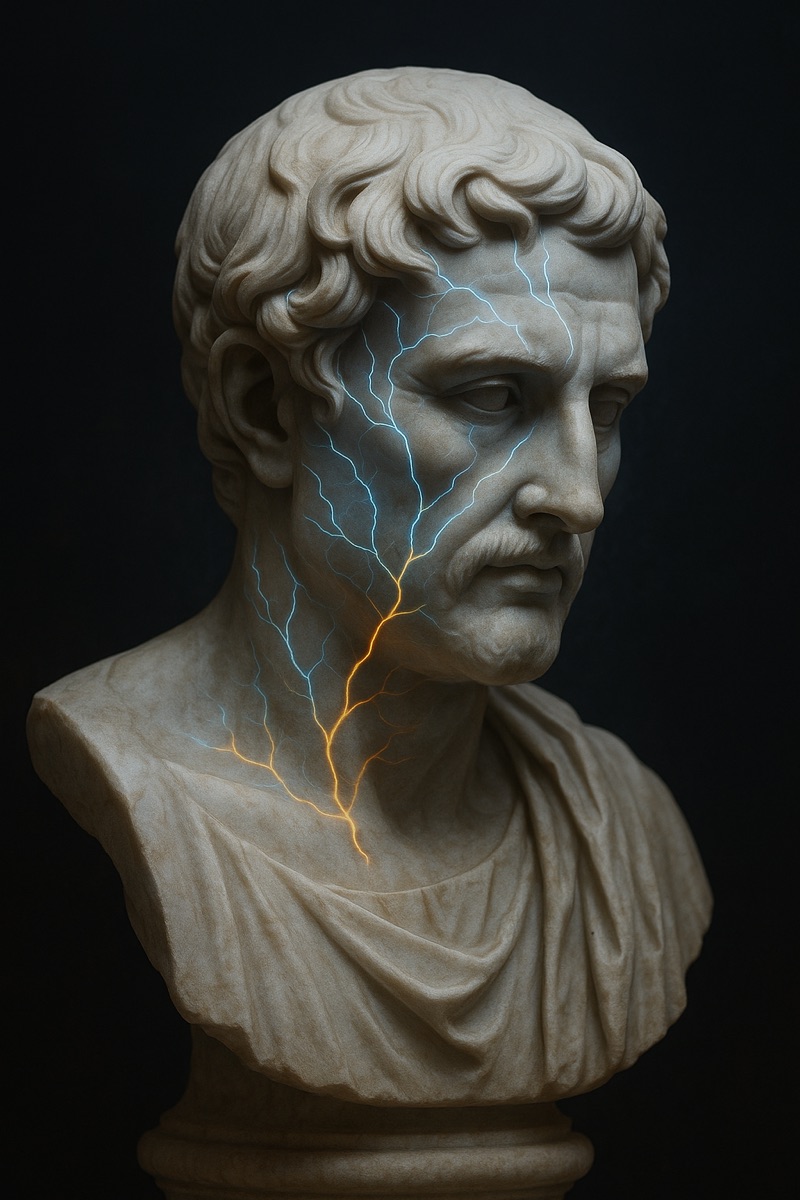
Nearly twenty years ago, while I was teaching undergraduate personality theory, a footnote mentioned Aristotle’s student who “classified types of men”. I ordered the book expecting a historical curiosity. Instead I found a mirror: my clients, my students and, if I’m honest, parts of me.
I lost my copy in the Brisbane floods and largely forgot about it. Then I heard Robert F. Kennedy Jr. blaming the “autism explosion” on vaccines and paracetamol, and found myself reaching back for those fifty-odd pages. If autism really is new, we shouldn’t be able to find it in the ancient world. Can we?
Thirty Athenian characters
Theophrastus succeeded Aristotle as head of his school around 300 BCE. His little book, The Characters, is thirty short sketches of everyday Athenian types: the Flatterer, the Boor, the Garrulous Man, the Pedant. They weren’t case studies. They were moral portraits, written to poke fun at bad manners. But look past the moral chiding and some of them are strikingly familiar.
The Blunt Man, roughly, is one who says whatever comes into his head, at any time, to anyone. That isn’t cruelty. It’s literalism: truth without the social varnish.
The Boor eats dried figs instead of what he’s served, is silent while others joke, and talks when they fall quiet. To an Athenian, bad manners. To us, perhaps sensory selectivity and a social rhythm that’s slightly out of step.
The Talkative Man sits down beside strangers and tells them everything about himself, and when they try to leave, takes hold of their cloak to finish his story. Perhaps an ancient version of info-dumping about a special interest.
And the Absent-Minded Man sends a servant to market, then goes himself to buy the same things, forgets what’s in his hand, and leaves a friend’s house wearing the friend’s cloak. Theophrastus saw folly. A kinder reading is executive dysfunction: the familiar scatter of ADHD, or working memory overloaded.
An ancient catalogue of neurodiversity
By my rough count, about a quarter of the thirty sketches describe traits we would now recognise as autistic or ADHD-like: literal communication, social mismatch, ritual, forgetfulness, intense focus. It’s a rough estimate from a rough process, and the sketches aren’t science. But it fits what we know now: diagnoses are narrow, while the traits themselves are spread widely through the population.
Different minds have always been here, in Athens, in Alexandria and in every era since. Sometimes they were mocked as vices. Later they were pathologised as disorders. Perhaps now we are starting to see them as part of the ordinary range of being human.
Visibility is not incidence
When commentators warn of an “autism explosion”, they are confusing visibility with incidence. Diagnostic criteria have broadened. Awareness has risen. Services and advocacy have improved. Autistic people didn’t suddenly appear.
Theophrastus shows that neurodivergent people were already eating figs, avoiding festivals and walking off with the wrong cloak in 300 BCE. The rise in autism diagnoses isn’t an epidemic of pathology. It’s an epidemic of recognition.
History rhymes
When I studied history, the approach I was taught wasn’t about memorising dates. It treated history as an enormous natural laboratory. As the line usually attributed to Mark Twain goes, history doesn’t repeat itself, but it often rhymes.
So when people in charge of health policy describe people who are different in ways that suggest they are a burden, you don’t have to look very hard for the rhyme. Read old books. They are a good antidote to the idea that anything about human nature is new.
Also on: Substack